

AI/GS/NS/155/2025
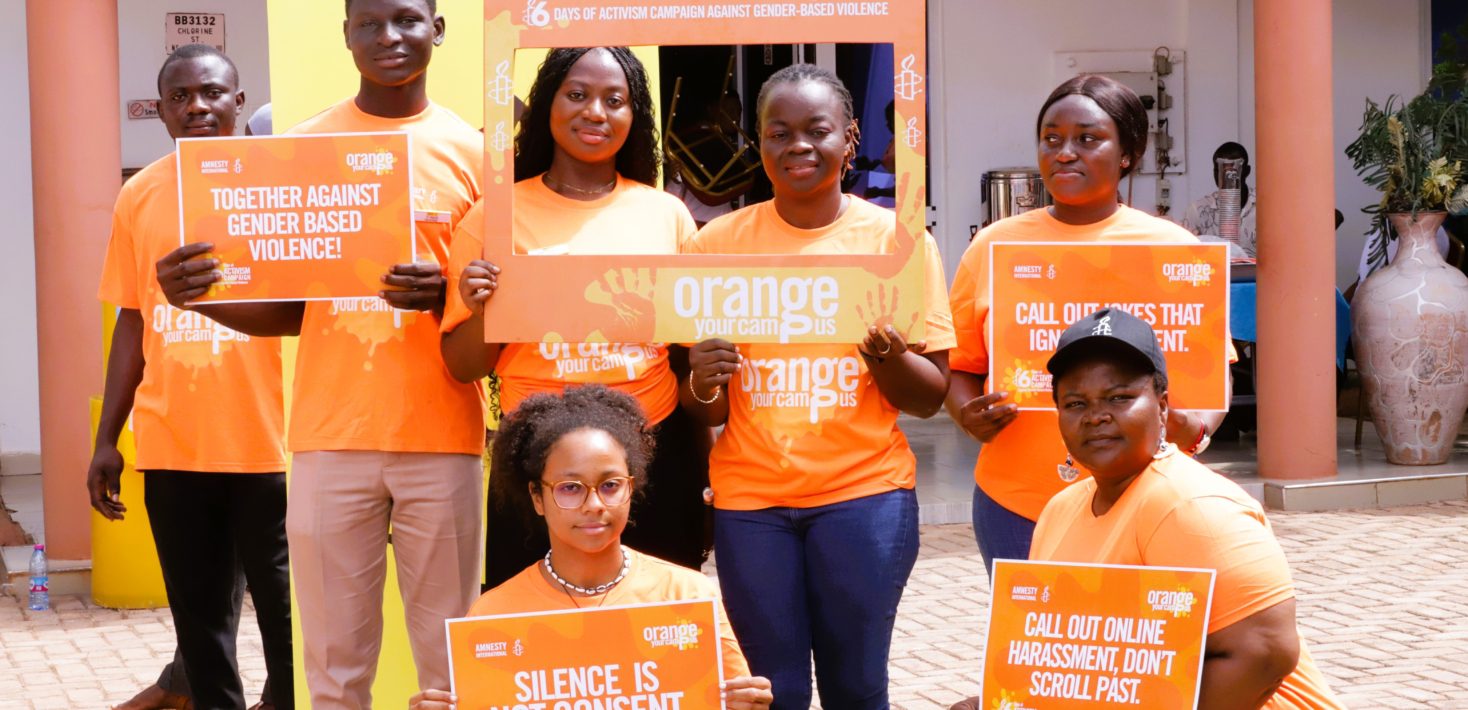
As we mark the 16 Days of Activism against Gender-Based Violence, Amnesty International Ghana calls attention to a troubling reality in Ghana. The urgent need for attention to digital violence is needed now more than ever.
This year’s global theme, “UNiTE to End Digital Violence Against All Women and Girls”, demands that we confront not only physical abuse but also the harms perpetuated online. The stories emerging today in Ghana show that digital violence is part of a larger tapestry of gender-based violence woven with threads of inequality, silence, and impunity.
Recent data released by SEND Ghana reveals a stark and painful truth: youth and persons living with disabilities face unequal risk of sexual and gender-based violence. Their vulnerability is compounded by limited access to protective services, social isolation, and a lack of tailored support mechanisms.
A recent report, covered by Citi Newsroom, further amplifies that reality: according to SEND Ghana’s findings, a staggering 84 percent of Ghanaians have been exposed to some form of sexual or gender-based violence. This is not just a statistic; it is a national crisis that exacts a heavy toll on individuals, families, and communities.
These numbers echo in the lived experiences of many. Just weeks ago, a viral video surfaced of a man violently assaulting his wife in their own home. The Ministry of Gender, Children and Social Protection rightly condemned the act and confirmed the Ghana Police Service is investigating the matter. The government’s response reflects a growing recognition of zero tolerance for domestic violence. Yet, while words of condemnation are necessary, they are not sufficient.
In recent years, the digital sphere has become a battleground for gender-based violence: harassment, shaming, non-consensual image-sharing, blackmail, and other forms of abuse lurking behind screens. Social media and messaging platforms amplify these harms, especially against women, girls, youth, and persons living with disabilities.
Digital violence invades privacy, isolates survivors, and often leaves little trace. For those already at heightened risk, the digitally mediated harms are especially insidious.
Our Call to Action (It Is Time for Real Change)
We call on the Government of Ghana to invest in more shelters, legal aid and social welfare services. A holistic approach is needed to end gender-based violence. We are also appealing that the domestic violence victim support fund be well resourced.
We also call on the Ministry of Gender, Children and Social Protection to strengthen partnership with the Ghana Police Service and other support services to ensure victims and survivors are able to seek justice and get the necessary support.
We urge the Attorney-General to fast-track prosecution of perpetrators of GBV cases and ensure that justice is survivor-centred.
Hospitals must ensure the medical treatment and medical report are completely free for survivors.
We also appeal to the government for the full resourcing of DOVVSU, particularly in rural and underserved districts, so that case handling is prompt, professional, and sensitive.
We call for zero-tolerance community bylaws against domestic violence, child marriage, and harmful traditional practices. Laws that are enforced, not just declared.
To community leaders and citizens, let’s be each other’s keeper, report GBV cases, challenge harmful social norms, and support survivors with empathy. We call on leaders at the district level to organise and support bystander intervention training in communities and schools so that everyone, including peers, neighbours, and students, can act safely and confidently when they see violence.
The 16 Days of Activism is more than a symbolic campaign. It is a call to confront the realities of violence (physical, emotional, and digital) that women, girls, youth, and persons living with disabilities face every day in Ghana.
Amnesty International is a movement of 10 million people which mobilises humanity in everyone and campaigns for change so we can all enjoy our human rights. We are independent of any government, political ideology, economic interest, or religion. We believe that acting in solidarity and compassion with people everywhere can change our societies for the better.
~END~
Click Download for PDF Version