

Global Analysis
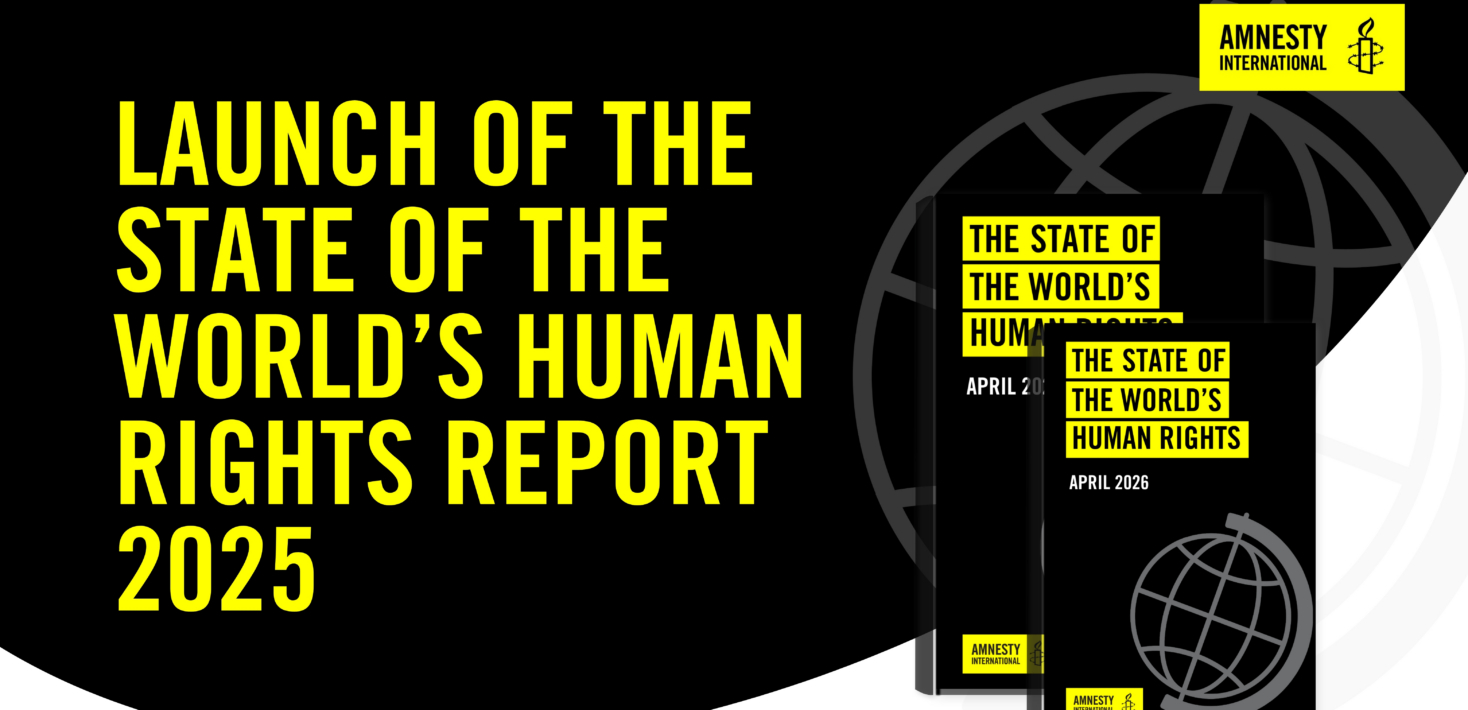
Amnesty International documented widespread violations by governments and other actors, failures of accountability and systemic injustices in 2025, alongside limited areas of progress. Many of these patterns have continued into 2026, as the international rules-based order faces sustained attack.
Crimes under international law have been committed extensively. They include Israel’s genocide against Palestinians in Gaza, Russia’s crimes against humanity in Ukraine and war crimes and other crimes under international law in Myanmar, Sudan and other conflicts. Irresponsible arms transfers have continued to fuel atrocities, although activism and legal pressure have led some states to restrict or ban arms exports to Israel. The United States of America (USA) and Russia undermined international accountability mechanisms, particularly the International Criminal Court (ICC), in 2025, while several other states announced their withdrawal from the Rome Statute. Nonetheless, the ICC and other mechanisms secured notable arrests and convictions and new investigative bodies, including a special tribunal on the crime of aggression against Ukraine, were created.
Authoritarian practices have intensified worldwide. The governments of Afghanistan, China, Egypt, India, Iran, Kenya, the United Kingdom (UK), the USA and Venezuela, among other countries, violently repressed protests, criminalized dissent through counterterrorism and security laws or used enforced disappearances, executions and abusive policing tactics in 2025. Torture and ill‑treatment, including through electric shock weapons, remained widespread, although momentum grew for a United Nations (UN) Torture‑Free Trade Treaty.
Discrimination has been a central theme. Refugees and migrants have faced mass deportations and racially discriminatory policies, while people displaced across international borders in the context of climate change have remained largely unprotected. Racial injustice linked to colonialism and extractive industries have persisted, alongside calls for reparations. Gender‑based violence and restrictions on women’s rights were pervasive. While there were legal advances in a few countries to expand abortion rights and prohibit child marriage in 2025, existing barriers to access abortion and post-abortion care remained in place. Meanwhile, the onslaught of attacks on a range of rights of LGBTI people, especially transgender people, increased across the world.
Governments have failed to phase out fossil fuels, while climate finance and adaptation support have fallen far short of what is needed. Debt, aid cuts and unfair global economic structures have undermined economic and social rights. Corporate abuses, including environmental harm, labour rights abuses and the use of lawsuits, continued in 2025, while a landmark new European Union (EU) corporate due diligence regulation was watered down.
Finally, governments have used technology to enable and strengthen authoritarian practices. Governments, facilitated by corporate actors, have deployed unlawful surveillance to restrict the right to freedom of expression or repress protests. While human rights harms associated with social media platforms and the rising number of generative artificial intelligence (AI) tools were increasingly understood in 2025, regulation lagged behind.
Click the link for the full report